
KEIR STARMER’S ARTICLE IN LBC this morning framed the current unrest as “a fight for the soul of the country.” He condemned extremism and highlighted antisemitism at certain pro-Palestine demonstrations. On the surface, these points are unobjectionable. The deeper issue is what the piece conspicuously omitted.
Starmer’s intervention reads more as an exercise in crisis management than an attempt at political leadership. It appeals for unity and better instincts but fails to confront the structural and political failures that have eroded public trust and fuelled the very divisions he condemns. By sidestepping the most contentious drivers of discontent — large-scale migration, integration failures, differential treatment in policing, and historic institutional scandals; the article leaves the underlying causes largely unexamined.
This omission matters. Millions of Britons, not just fringe activists, now believe that mainstream politics has systematically failed to address real tensions around rapid demographic change, social cohesion, and institutional impartiality. Dismissing these concerns as mere “extremism” or online distortion does not reduce their potency; it increases public alienation.
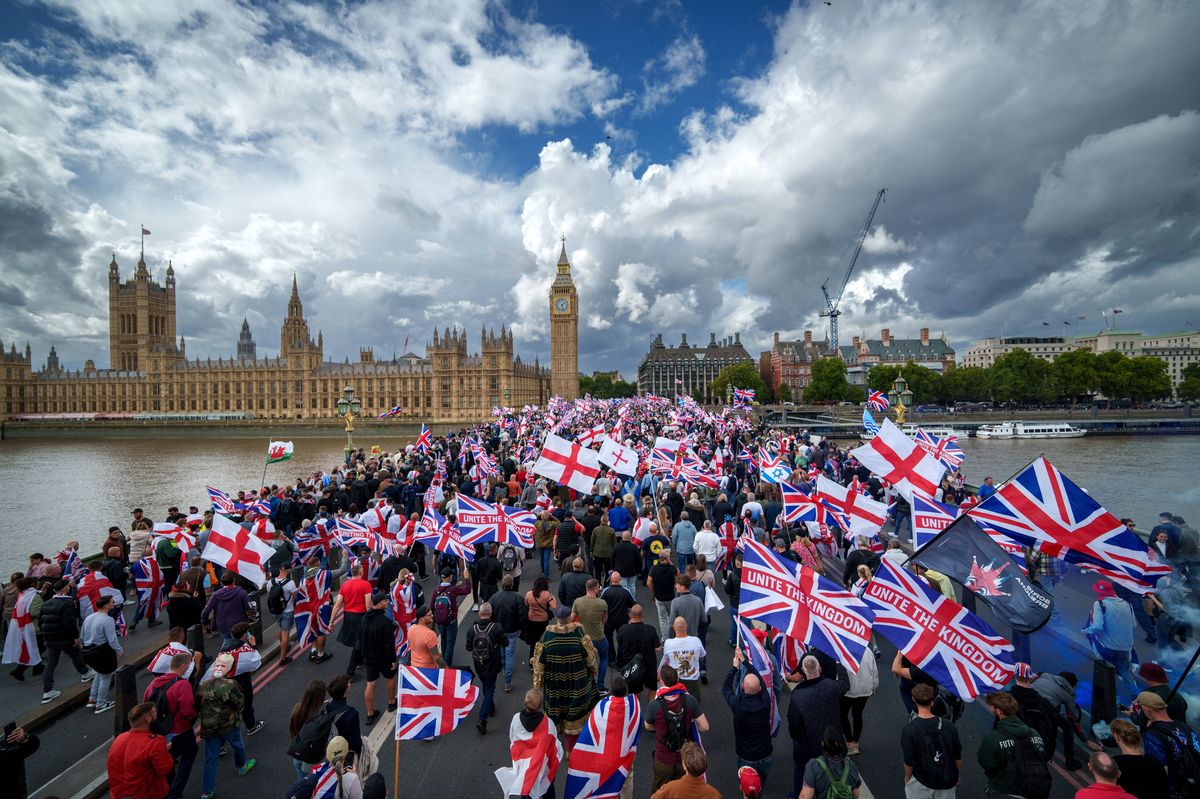
The “Unite the Kingdom” marches illustrate the problem. While some participants and organisers clearly cross into extremism or opportunism, reducing the broader turnout to mere radicalism ignores the legitimate grievances of many ordinary citizens, particularly in economically stagnant and culturally transformed communities who feel their concerns about national identity and integration have been moralised rather than engaged with for over a decade.
Starmer didn’t just criticise extremism; he officially exiled millions of ordinary Britons from the Britain he claims to know.
The same pattern is evident in the debate over policing. The notion of “two-tier policing” is often ridiculed by establishment voices, yet the perception persists across large sections of the public. Nationalist or anti-mass migration protests frequently encounter heavier operational presence and swifter political condemnation, while certain pro-Palestine marches have at times tolerated rhetoric and behaviour that many British Jews experienced as threatening. Whether this reflects conscious bias or differing operational calculations is secondary. In politics, persistent public perception of unfairness itself becomes a major problem of legitimacy.
Antisemitism, which Starmer rightly condemned, has remained at historically elevated levels. The Community Security Trust recorded 3,700 antisemitic incidents in 2025 — the second-highest annual total on record. Broad assurances of “using the full force of the law” are necessary but increasingly insufficient without transparent assessment of whether responses have been consistent and robust across different contexts.
When a Prime Minister tells a large part of the population they no longer represent their own country, he doesn’t defeat the far-right; he creates it.
Most damaging of all is the continued shadow of the grooming gangs scandals in Rotherham, Rochdale and elsewhere. Years of documented institutional failure, where authorities hesitated to act decisively for fear of racial or cultural sensitivities, continue to poison public confidence. The ongoing statutory inquiry into grooming gangs, which began in April 2026, is a belated recognition of the issue, yet many still doubt whether the deeper cultural and political lessons have truly been absorbed.
Britain’s recurring difficulty lies in its reluctance to address difficult questions about migration, integration, identity and institutional trust while they remain manageable. When such conversations are deferred or pathologised, grievances accumulate and re-emerge in cruder, more polarised forms.
Condemning extremism is the straightforward part of leadership. The far more demanding task, and the true test of statesmanship, is to understand the conditions that make a society vulnerable to extremism in the first place, and to address those conditions honestly. Until that conversation is conducted with candour rather than caution, appeals to unity will remain superficial.